For hotels and resorts
What to put in a hotel lobby so guests actually use it
Most hotel lounges are beautiful and empty. The problem is rarely the furniture — it is that the room gives nobody a reason to stay in it longer than it takes to check in. Here is what changes that.
Why a good-looking lobby stays empty
A lobby is designed to be walked through, and it usually succeeds. Guests arrive, deal with reception, and go up. The ones who come back down are going out. Nothing in the room asks anybody to stop.
This matters commercially because the guests who do stop are the ones who order. A lounge that holds people for forty minutes feeds the bar; a lounge people cross in thirty seconds is expensive floor space with a sofa on it.
The useful reframe is that you are not decorating a room, you are competing with the guest’s own room. Upstairs there is a bed, a television and privacy. To beat that you need something the room does not have — other people, better coffee, a bigger table, or something to do.
Fix the seating before anything else
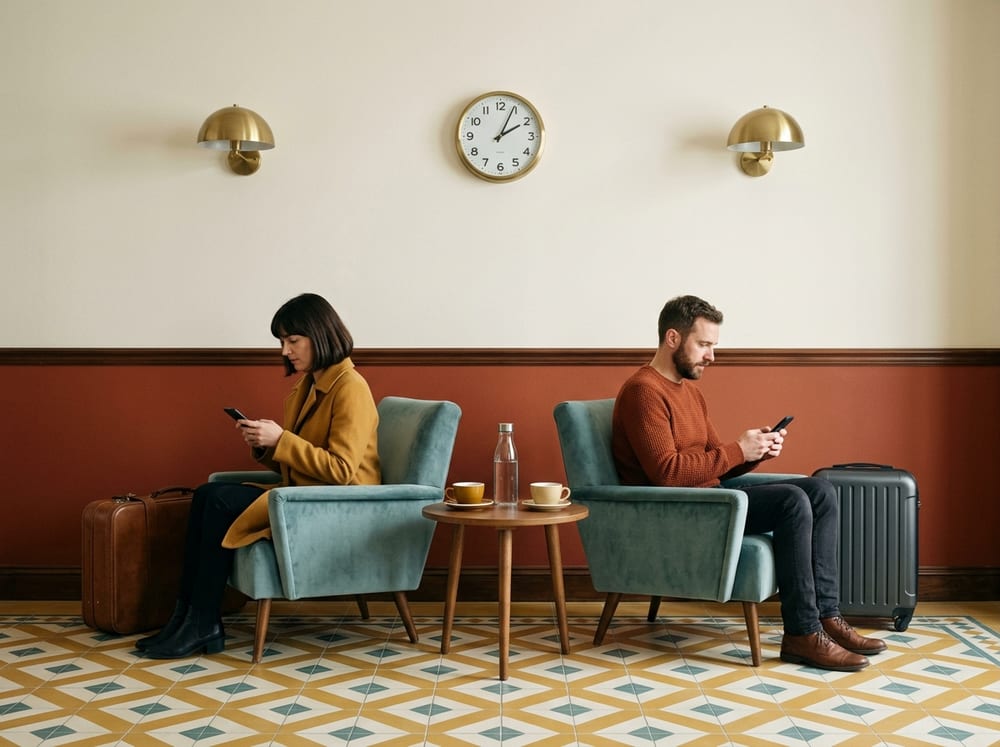
Most lobby seating is arranged for photographs rather than for people. Two armchairs facing each other across a low table look composed and are used by nobody, because sitting in one commits you to staring at whoever takes the other.
The arrangements people actually choose are the ones that let them face out, sit at a workable height, and put something down.
Give every seat a table at the right height
A low coffee table is unusable for a laptop, a notebook or a proper meal. One table at normal height in a lounge changes how long people stay in it more than any other single piece of furniture.
Break up the facing pairs
Seats at an angle, or side by side facing the room, are used far more readily than two chairs in a stand-off. Guests want to be among people, not opposite one.
Put power within reach
A guest with a dying phone goes upstairs. Sockets at seat level, or a few table lamps with USB in the base, keep them where they are.
Leave one large table
Families need somewhere to spread out, and so do two colleagues with paperwork. A single big table is used constantly in hotels that have one.
Know exactly when your dead time is
Every hotel has hours it cannot avoid. Guests arrive before rooms are ready. They check out at eleven and their flight is at six. Transfers run late, and it rains.
These hours are not a nuisance to be managed — they are the only time your lounge has a guaranteed audience with nothing to do. A guest waiting four hours for a transfer will spend money somewhere. The question is whether that somewhere is your bar or the café across the road.
It is worth writing down when yours actually are, because they are more predictable than they feel: the hour before check-in, the two hours after checkout, and whatever your local weather does in the afternoon.
Serve something worth coming down for
If the lounge coffee is worse than what is in the room, the lounge has already lost. Guests are unusually well-calibrated about this — a hotel that serves genuinely good coffee gets talked about in reviews far out of proportion to what it costs to do.
It also does not need to be complicated. One thing done properly beats a long menu executed indifferently, and it gives guests a specific reason to come down rather than a general one.
Solve the bored-child problem
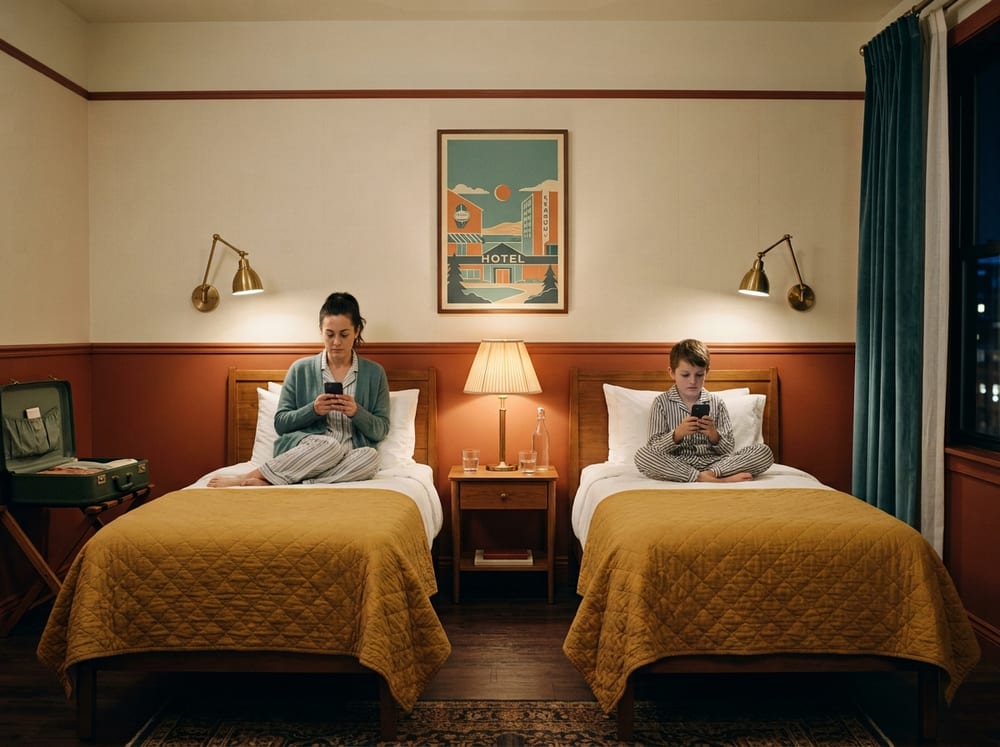
A parent with a restless child in a lobby has a problem, and they will leave to solve it. That is a lost hour of bar revenue and, more importantly, a stay they will remember as stressful.
The old answers — a shelf of battered board games, a basket of toys — work, but somebody has to own them. Pieces go missing, boxes fall apart, and by the second season the shelf looks neglected, which is worse than not having it.
This is the one place our own product is the honest answer, so we will say it once. Board & Pieces puts the games on guests’ own phones — chess, backgammon, go and more — and while your venue is sponsored, every game played there is free for whoever is playing. Nothing to buy, replace or tidy. It works in the lounge, by the pool, and in the room, which is where a family with a long evening actually is.
Tell guests the room is for them
Hotels routinely build a lounge and then never mention it. It is not on the key card wallet, the front desk does not point at it, and there is nothing in the room that says it exists.
A line at check-in — "the lounge is open until midnight, the coffee is good" — costs nothing and is the single cheapest intervention on this list. So is a card in the room. Guests do not explore hotels; they use what they are told about.
Measure occupancy, not opinion
Pick three times of day and count how many seats in the lounge are taken. Do it for two weeks before you change anything, and two weeks after. Ten seconds a day, and it will tell you more than any amount of discussion at the management meeting.
Count seats rather than takings, for the same reason a café should count covers: revenue moves for a dozen reasons that have nothing to do with the room, and you will read whatever you were hoping to read into it.