For café owners
How to fill your café’s quiet hours
Every café has a dead stretch — usually somewhere between two and five, after lunch and before people leave work. Here is what actually moves it, in rough order of how little it costs you to try.
First, understand what the quiet hour actually is
The mid-afternoon lull is not a demand problem. The people who would happily sit in your café at three o’clock exist, and many of them are within a few minutes’ walk. What they lack is a reason to choose that hour, because nothing about it is urgent: they are not hungry, not on a break, and not meeting anyone.
That distinction matters, because it rules out most of the obvious fixes. Discounting a coffee does not create a reason to leave the house; it just lowers the price for people who were coming anyway. Almost everything that works does so by giving the hour a purpose it did not have.
Make it the best place to work in the neighbourhood
Remote workers are the most reliable afternoon customers there are, and they choose on a very short list of criteria: power, wifi, and whether they will be made to feel guilty for staying.
The mistake most cafés make is being ambivalent about it — tolerating laptops without committing. Ambivalence is worse than a clear no, because someone who is not sure whether they are welcome will not come back. Decide, then say so.
Put sockets where the seats are
An extension lead along a wall of two-seaters costs almost nothing and changes which tables fill up. Nobody sits for two hours at a table where their laptop will die.
Publish the wifi password
On the menu, on a card, on the wall. Making people ask is a small friction that filters out exactly the customer you want in an empty room.
Say your policy out loud
“Laptops welcome until five” is better than silence, and better than a grudging sign about minimum spend. It converts an uncertain person into a regular.
Turn the afternoon into something recurring
A one-off event fills one afternoon. A recurring one fills that afternoon every week, because people start planning around it, and because after a month it stops needing your effort to happen.
The format matters less than the repetition. What works is anything that gives strangers a reason to be in the same room at the same time on a known day: a language exchange, a knitting group, a book club, a chess afternoon, a mother-and-baby hour. Pick something you would not mind hosting for a year.
The practical trick is to make it findable. A recurring event that only your existing customers know about is a way of moving the same people around your week rather than adding new ones.
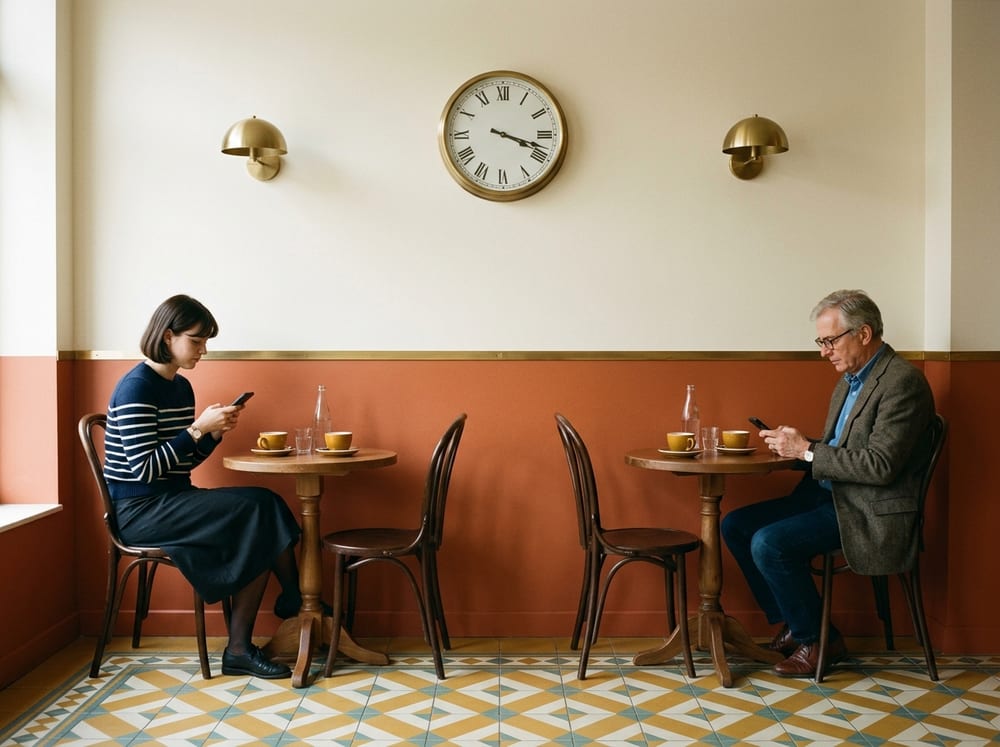
Borrow someone else’s audience
The businesses near you have their own quiet hours, and they are rarely the same as yours. A hairdresser’s clients wait; a gym empties at three; a co-working space has members who need to get out of the building.
A card on their counter offering something small at your place, and one on yours for them, costs two print runs and no commission. It works because the recommendation comes from someone the customer already trusts, which is worth more than any advertisement you could buy for the same money.
Give people a reason to stay once they are in
Filling a quiet hour is partly about arrivals and partly about dwell time, and the second is cheaper. Someone who stays forty minutes instead of fifteen has usually ordered twice, and they have also made the room look occupied — which is the single most effective thing at pulling in the next person through the window.
That is what board games do in a café, and why chess cafés have existed for three hundred years: a game is a socially acceptable reason to still be sitting there. The traditional problem is the equipment. Boards get damaged, pieces go missing, and somebody has to store, clean and hand them out.
This is the one place where our own product is the honest answer, so we will say it once and leave it there. Board & Pieces puts the games on your guests’ own phones — chess, backgammon, go and more — and while your venue is sponsored, every game played at your tables is free for whoever is sitting at them. Nothing to buy, nothing to lose, nothing to disinfect. Guests find your café in the app, or scan a printed code on the table.

Measure it, or you are guessing
Whatever you try, count covers between two and five for a fortnight before you start and a fortnight after. Not takings — covers. Takings move for reasons that have nothing to do with the afternoon, and you will talk yourself into believing whichever answer you preferred.
Give any change at least three weeks before judging it. Habits are what fill quiet hours, and a habit takes longer than a week to form. Most things that get abandoned as failures were abandoned in week two.